

Illustration for print or digital output
This section of the site covers how I work as a scientific illustrator or natural history illustrator.
Working as an illustrator/ designer for, say, a children's book is a different process. I have chosen to separate these ways of working on the site for now. Of course, there are crossovers and similarities between working as a scientific illustrator and/or a book illustrator.
Take the information here as a general guide rather than a fixed criteria.
Almost all illustrative work needs to go through a graphic design process. Please expect design to be brought up early on in our conversations about illustration.
Jump to section:
Illustration offerings
Illustrations can be made for print and or digital output in any file type.
Natural environments, wildlife drawings, animals, animal anatomy, diagrams, botanical plates, botanical diagrams, information imagery, illustrated infographic imagery, and process illustrations are all offered.
The following sensitive subjects are also offered in some contexts.
Please contact for further information.
Historical reconstructions, historical interpretation, human anatomy, anatomy diagrams, and human-related infographic imagery.

What steps are involved in creating a scientific illustration?
Every process will be unique.
Here are my core steps for every illustration process.
Overview
Up to 30 minutes online via video call.
The initial consultation will cover the project's purpose and goal, as well as an overview of how working together will look. The meeting runs for a maximum of 30 minutes and can only be completed via video call.
The Scientific Illustration Questionnaire must be filled out before this meeting.
When starting a design or illustration project for the first time, there is a lot of new information to take in. I try to stagger and guide this information over emails, video calls, and in-person meetings.
Helpful items to have prepared or considered before the first meeting.
There is never any pressure to continue working together after the initial consultation.
My aim isn’t to pressure people to work with me; my goal is to help people make the best-informed decision.
Future meeting costs are covered within the job quote.
If the project does move forward, the process of client onboarding is finished and a verbal agreement written.
What is the verbal agreement?
I don’t sell the copyright to my illustrated work, but rather license it.
A verbal agreement specifically states where and when the illustration can be used in plain English.
A description of the proposed project is laid out in detail with accurate pricing and specific dimensions. Verbal agreements also typically state the timeline and scope of the project. Writing this agreement is a two-way discussion to ensure each party is satisfied with the parameters set.
What is onboarding?
Onboarding is just a corporate word that I feel accurately describes the process of taking on a new client. Administration and the first payment are all part of this process. I work to make this process as smooth as possible.
If there isn’t any credible reference imagery to work from, the project may not be able to go ahead.
A great deal of thought goes into each scientific image created. This may mean reading scientific papers, books on the subject, going out into the field or usually a combination of all three.
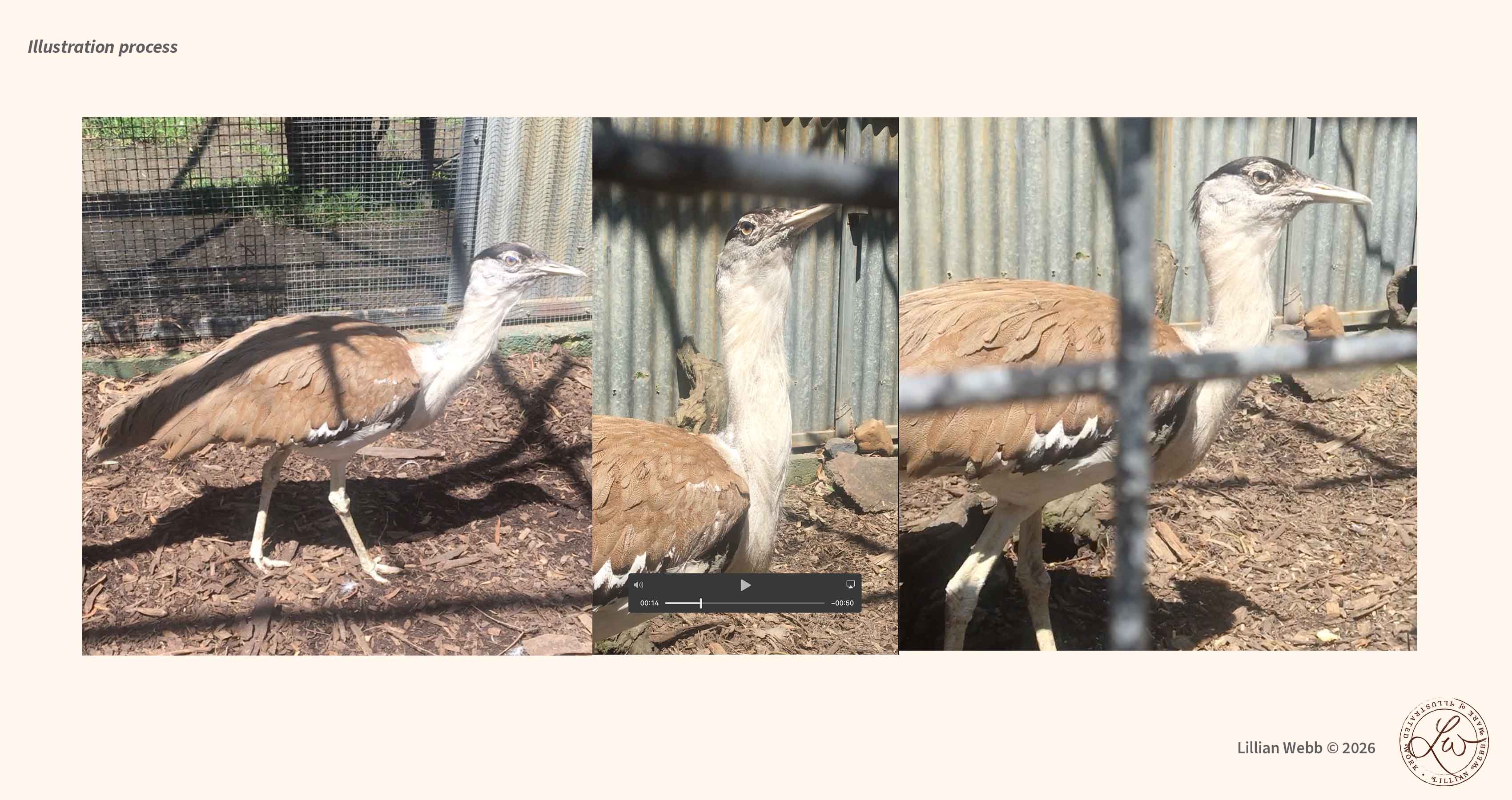
Above: For this example, I went to a zoo to film and photograph the Australian Bustard (Ardeotis australis). Where possible, I sketch from life.
This artwork isn’t a commercial commission. It is here as an example not connected to a job.
Concepts are usually submitted as PDFs in a video call. If the illustration is part of a design, then this concept can be quite in-depth with typographic arrangement and printing considerations.
Often, multiple concepts will need to be submitted.
Opportunities for changes in the illustration are available at this stage.
After the concept is sent to the client, there is typically a limited time to respond with feedback and changes.
The timeframe depends on the work the client is assessing.
Typically, 48 hours to four days is given.
Once this waiting time is exceeded, the project is on pause.
If this delay on the client's end is substantial, the project's due date may be extended.
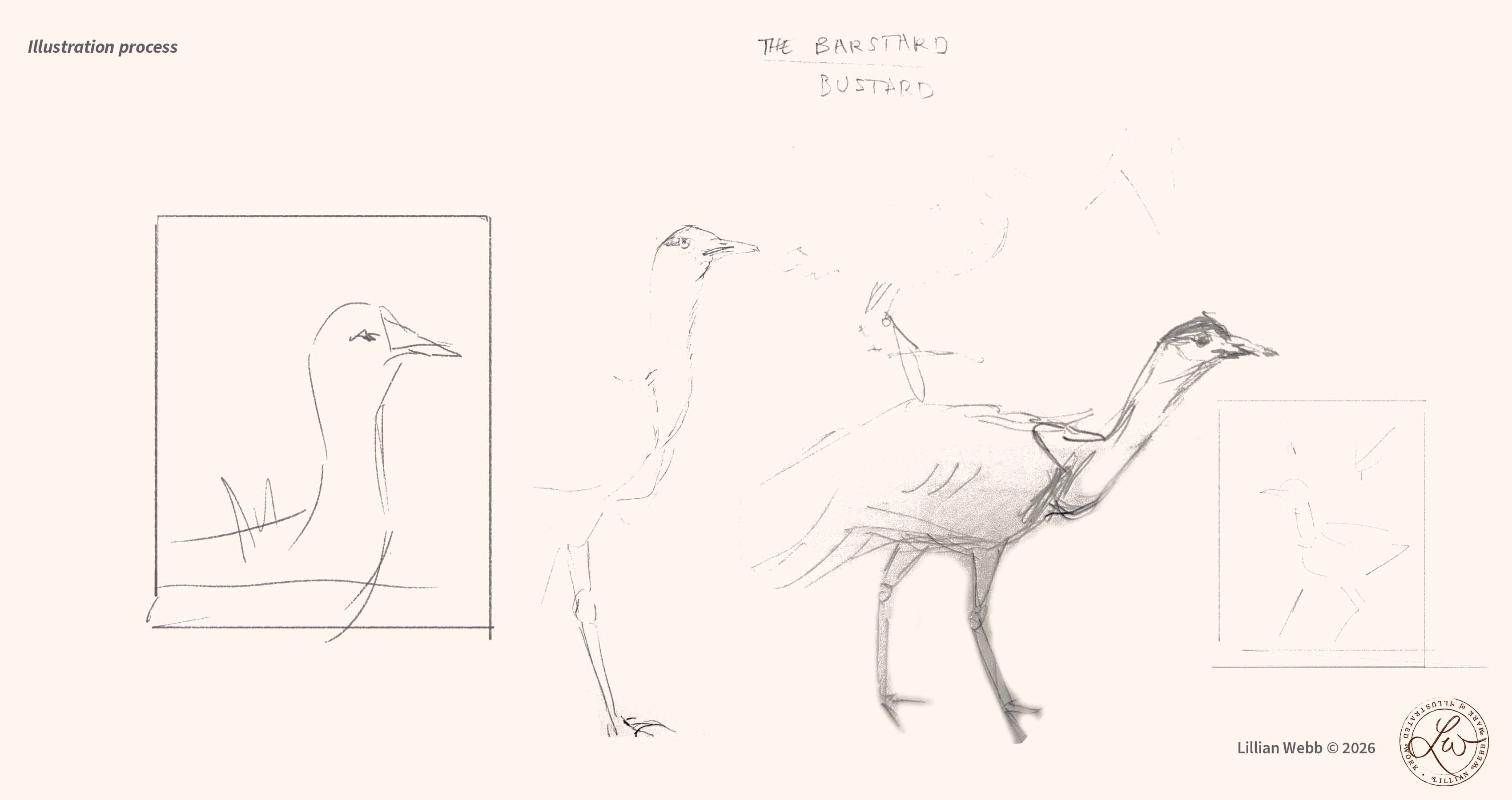
Above: For this example, my concept was a very simple thumbnail sketch.
For a client project, the concept will be an in-depth presentation.
Sometimes this sketching stage comes before the concept is submitted or vice versa. This part of the process is flexible.
Opportunities for changes in the illustration are available at this stage.
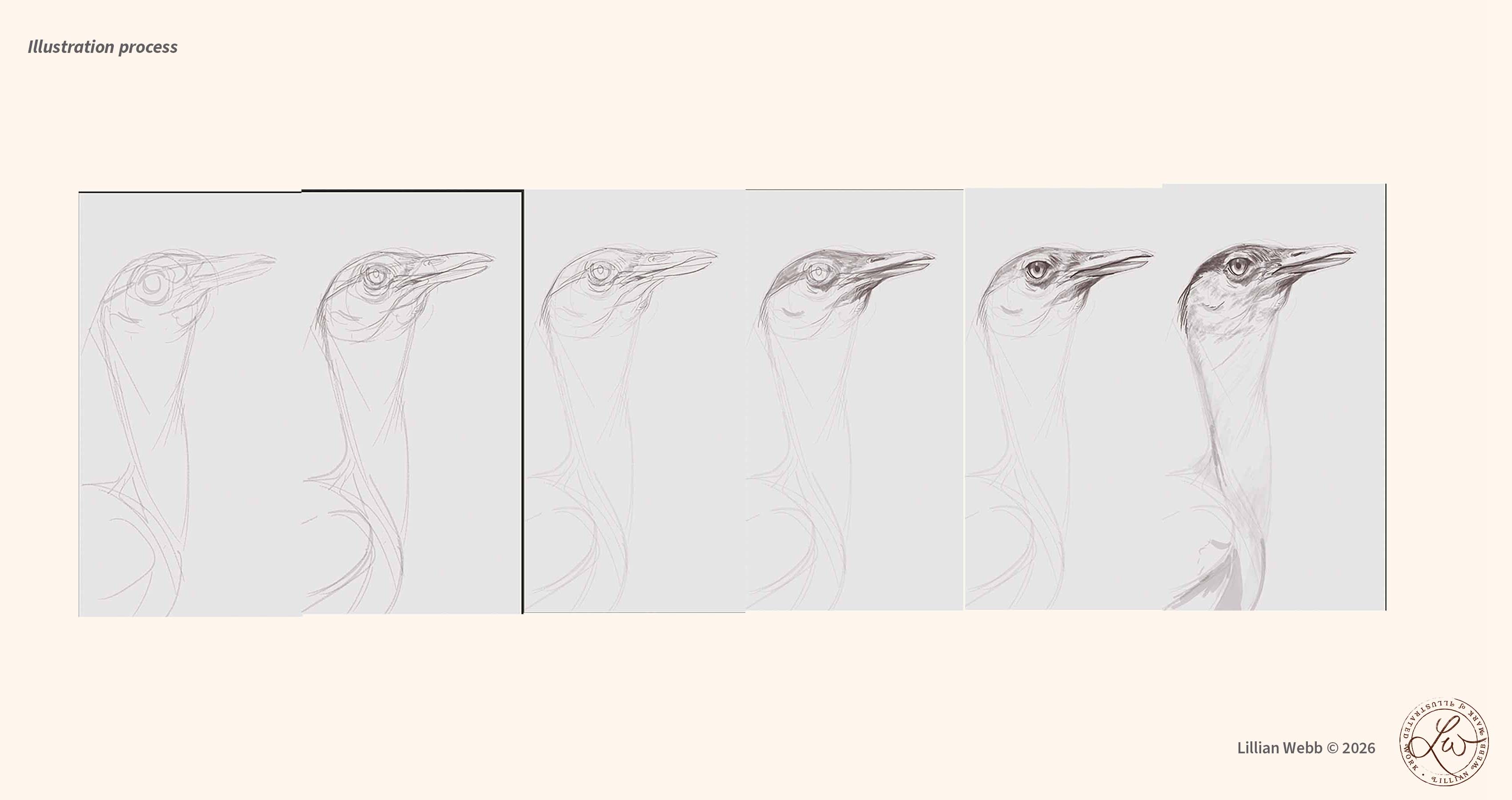
Above: I didn’t end up using this pose for the final bird portrait. The exercise helps to understand how to render the final artwork.
Tonal studies are an important step in finding out how the image will look without having to add colour.
Tonal studies provide opportunities for changes.
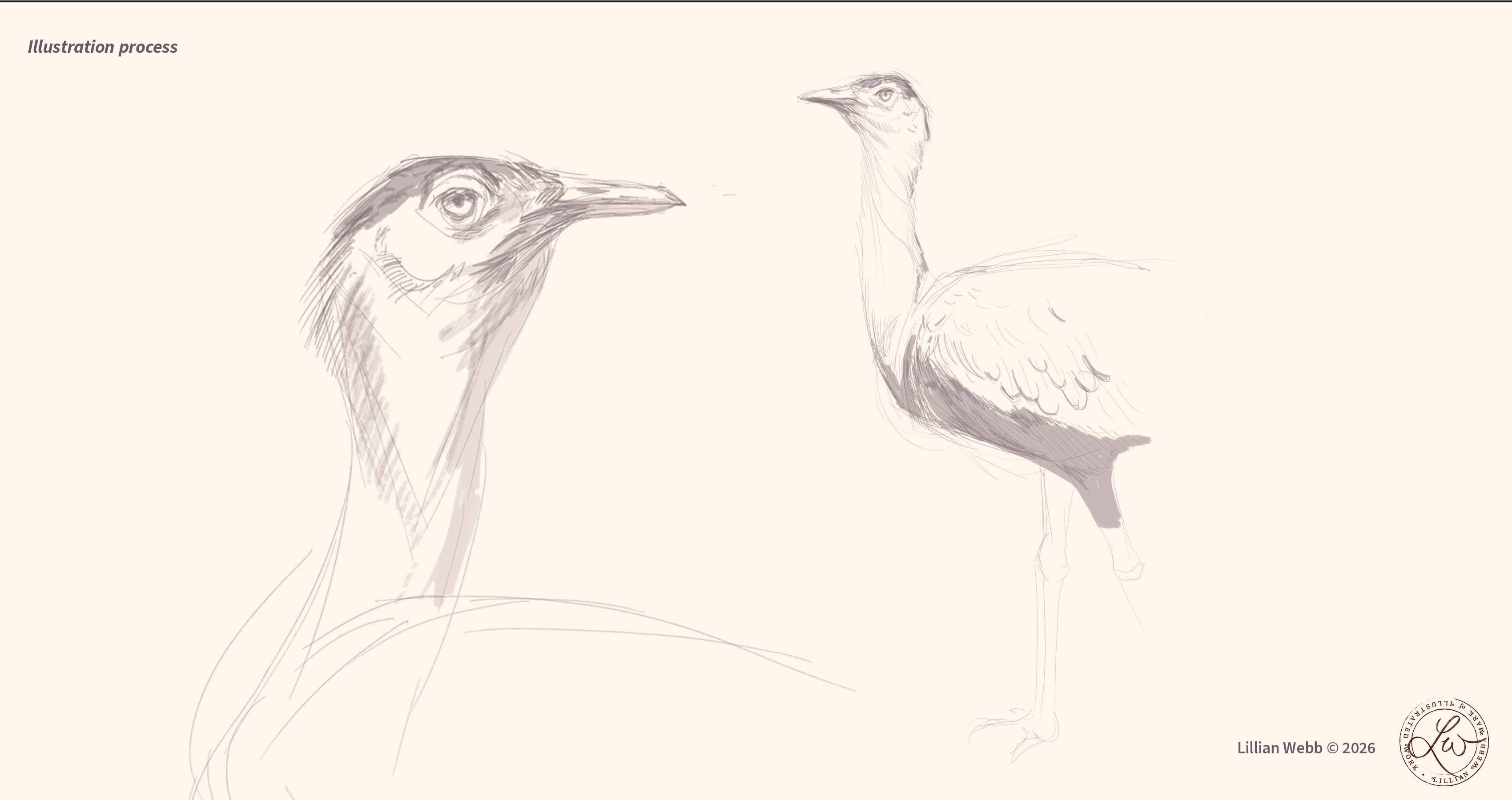
Above: Some of my tonal studies for this work.
Conversations about colour will happen early on in the consultation process. This part of the process allows for further exploration.
Colour studies provide opportunities for changes.
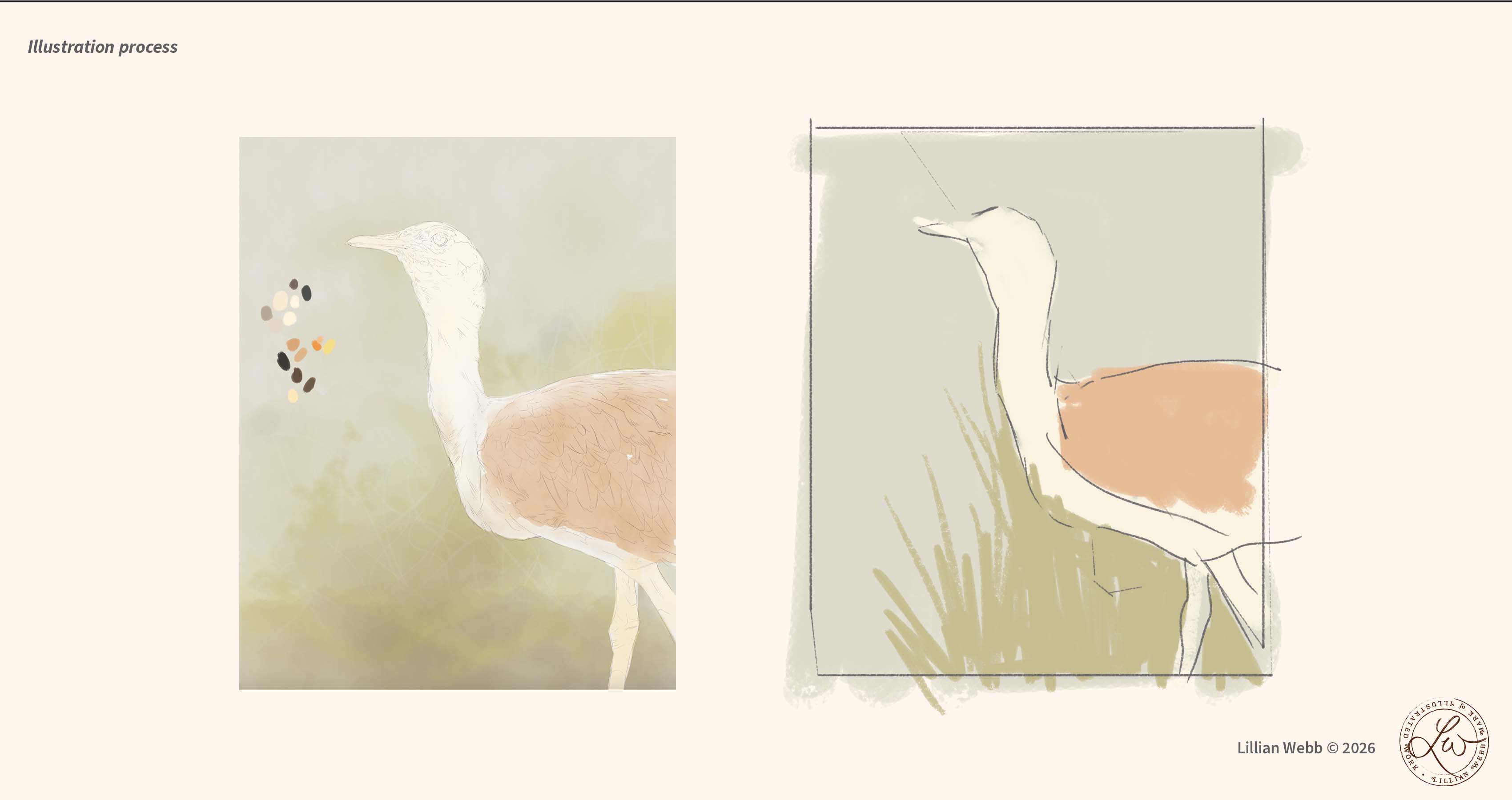
Above: Some of my colour studies for this work.
My line work is a clean and transparent plan from which the final work will be produced.
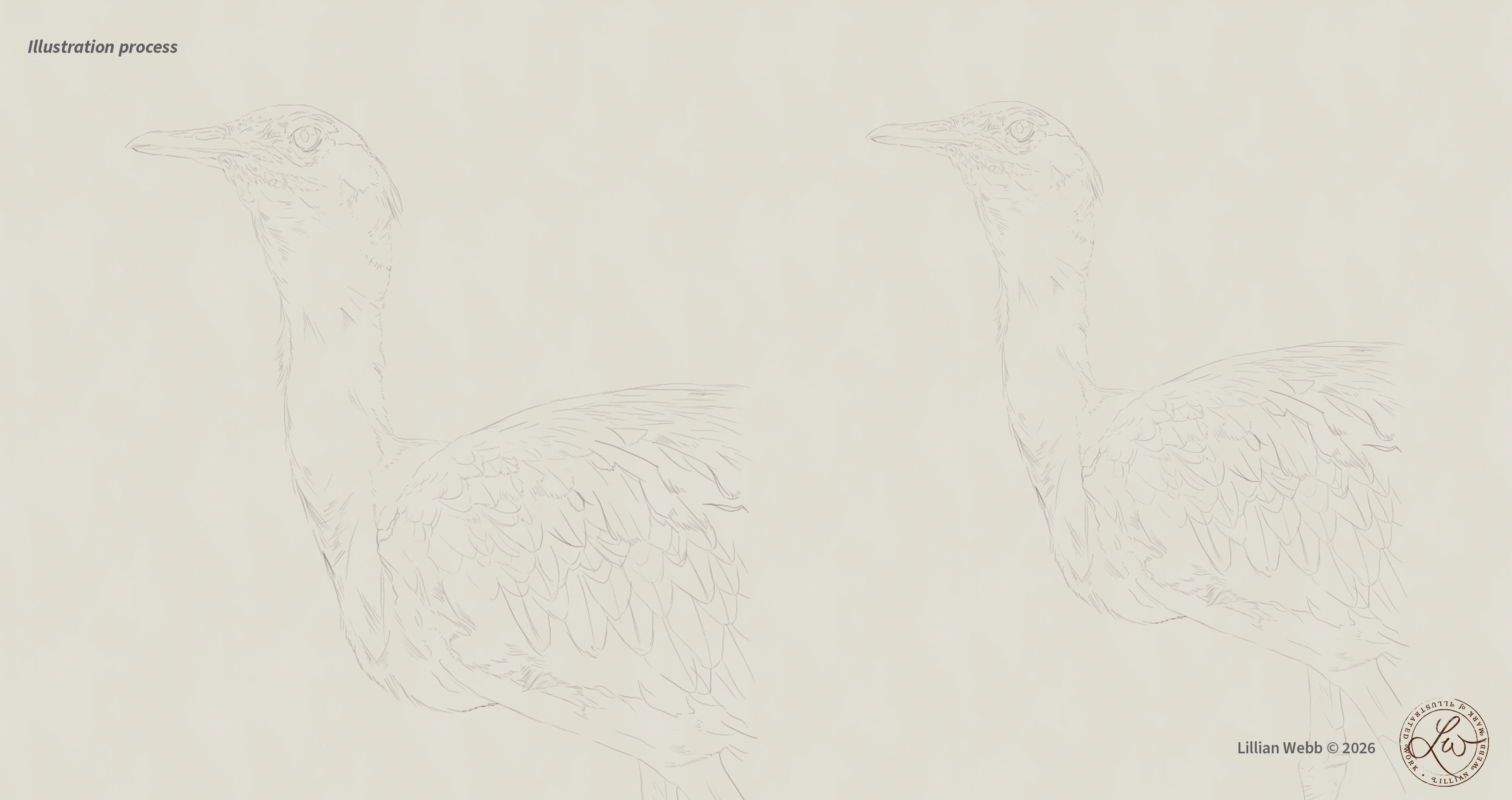
Above: An example of my final linework overlaid on the final canvas.
The ‘painting’ was worked up from here. This drawing is different from the tonal study as it serves more as a guide rather than an artistic expression of the subject.
The back-and-forth conversations in each previous stage have developed this outcome.
If the client wants a change of mind at this stage, this can be done, but it will result in extra cost.
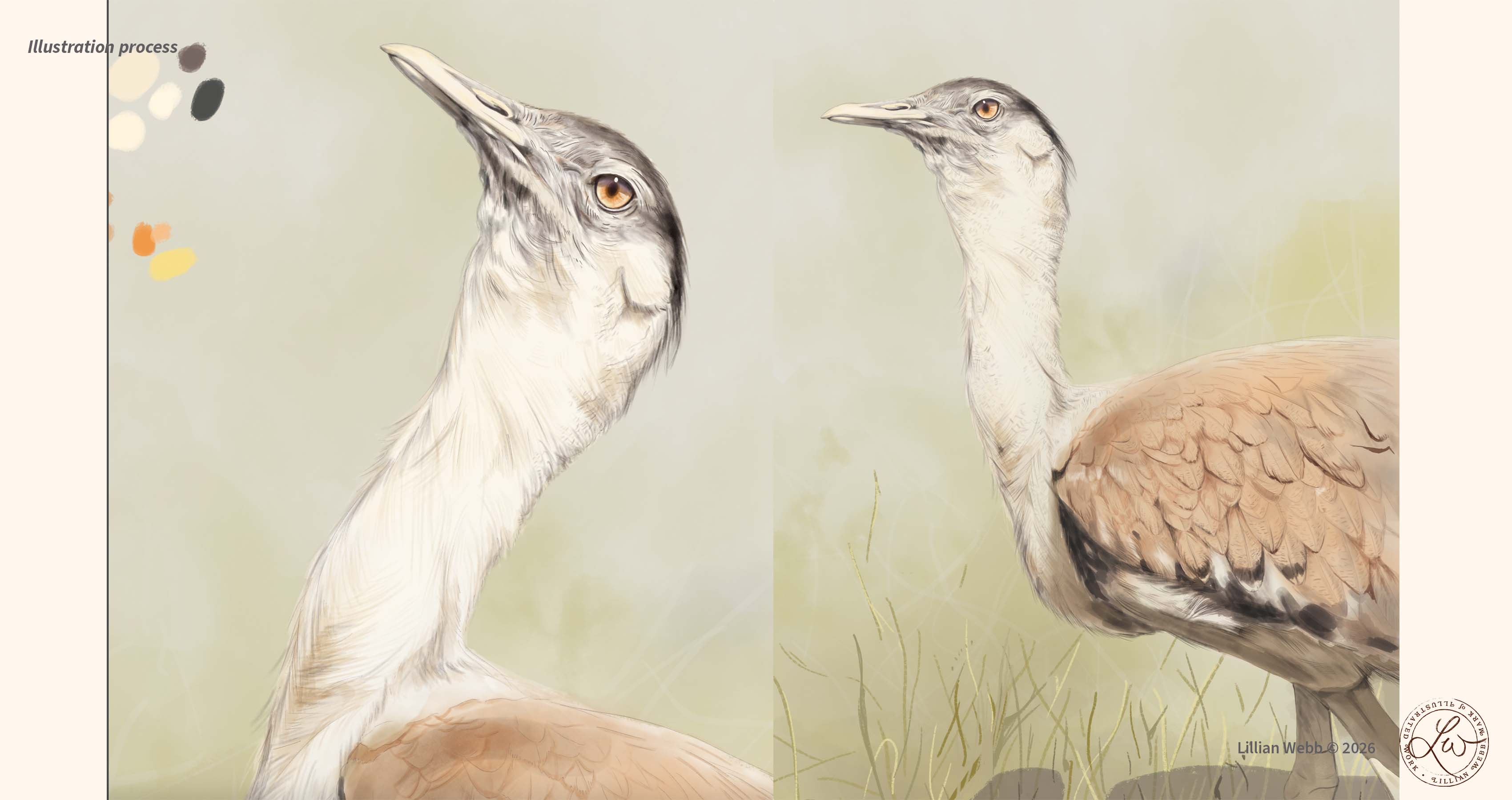
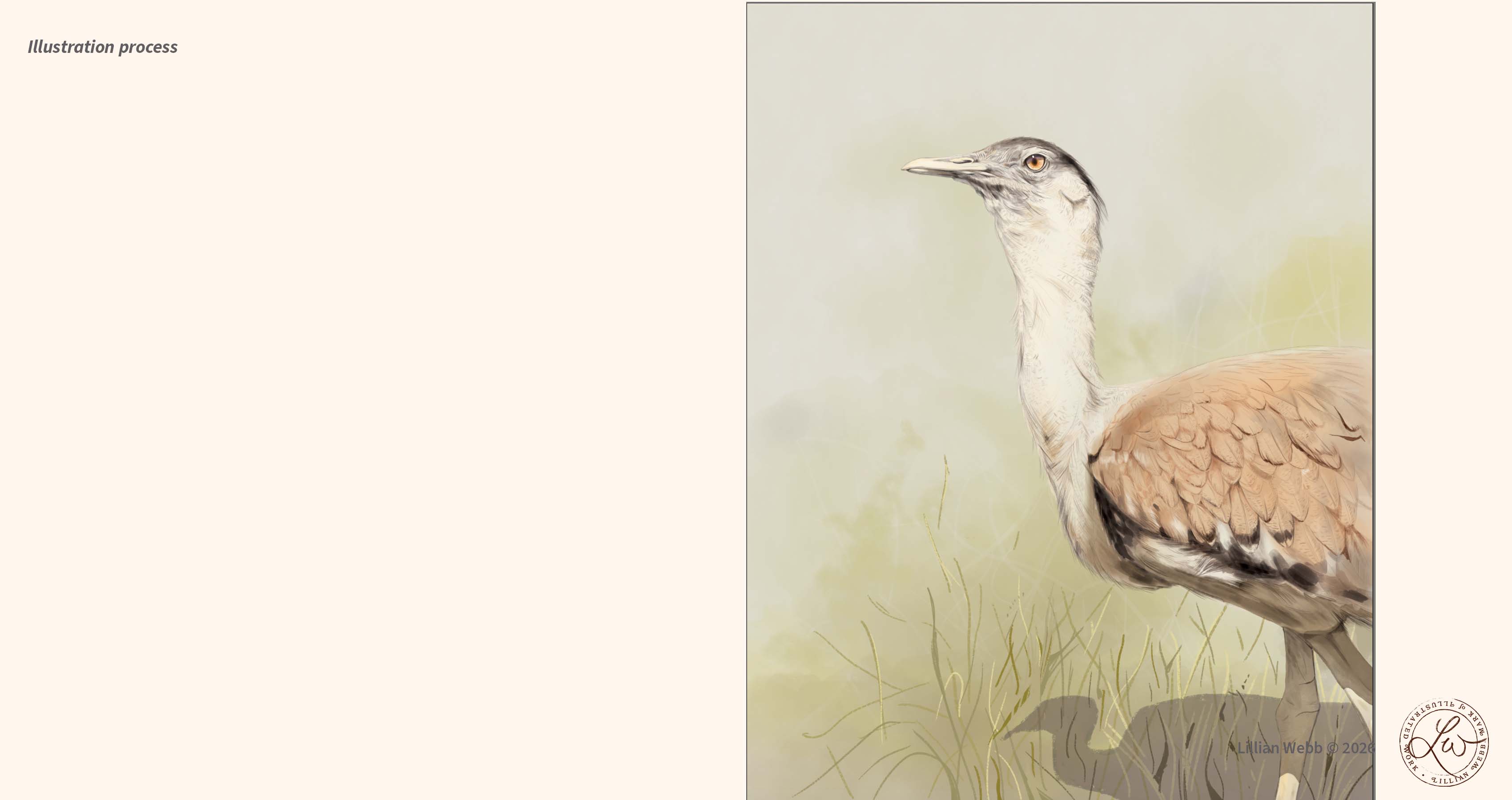
Above: An example of how the final image was rendered and the final result itself. My Natural History Illustration Portfolio also contains visual examples of my working process for each project.
File submitted
Illustrations can be made for print and/or digital output in any file type.
I can quote for work that sits outside of these parameters.
If I know the budget, I can consider what I can do within that price range.
To start a tailored quote, please use the illustration questionnaire.
All quotes are always free.
Although I am pricing this as an illustration, illustration and design almost always go together. Please expect design to be addressed in conversations about illustration.
Tonal or black-and-white line drawing.
Single image similar to the level of detail of the images below.
Consultation
Deliverables
How long will a tonal or black-and-white line drawing take to create?
The time frame will depend on the subject and complexity of the work.
A general guide is usually a few weeks to a few months.
The minimum is usually three weeks excluding consultation.
This will follow the illustration process steps above, without the colour stage.

Above: Cicadas / Rosella. Though this is traditional media, these are good examples of how “full” a linework illustration can feel. A digital version of this would look identical.
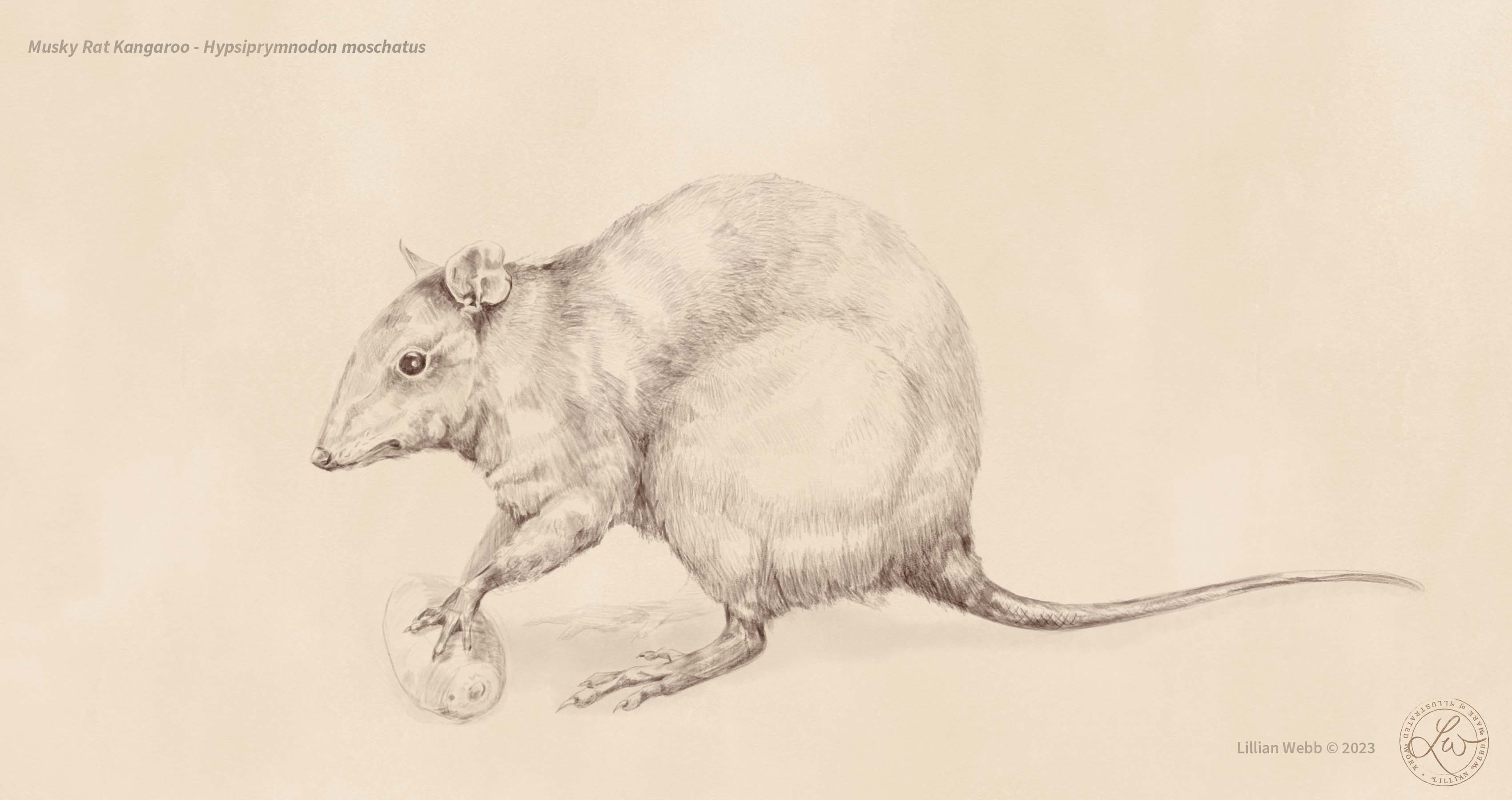
Above: An example of what a tonal illustration may look like. This tonal sketch was executed in Photoshop from life references.
It’s nice to note how “colourful” tonal works can look using only greyscale or sepia.
Full colour illustration
Why the big price jump?
Many illustration commissions are integrated into a design. Sometimes this design work is quite complex and requires liaising with third parties and travel. Examples of this job type include interpretive signage and museum or art gallery installations. At this point, this job becomes a design project as well as an illustration project. This price range reflects this change in scope.
Consultation
Deliverables
How long will a full colour artwork take to create?
The time frame will depend on the subject and complexity of the work.
The minimum is usually three months excluding consultation.
This will follow the illustration process steps listed on this site.
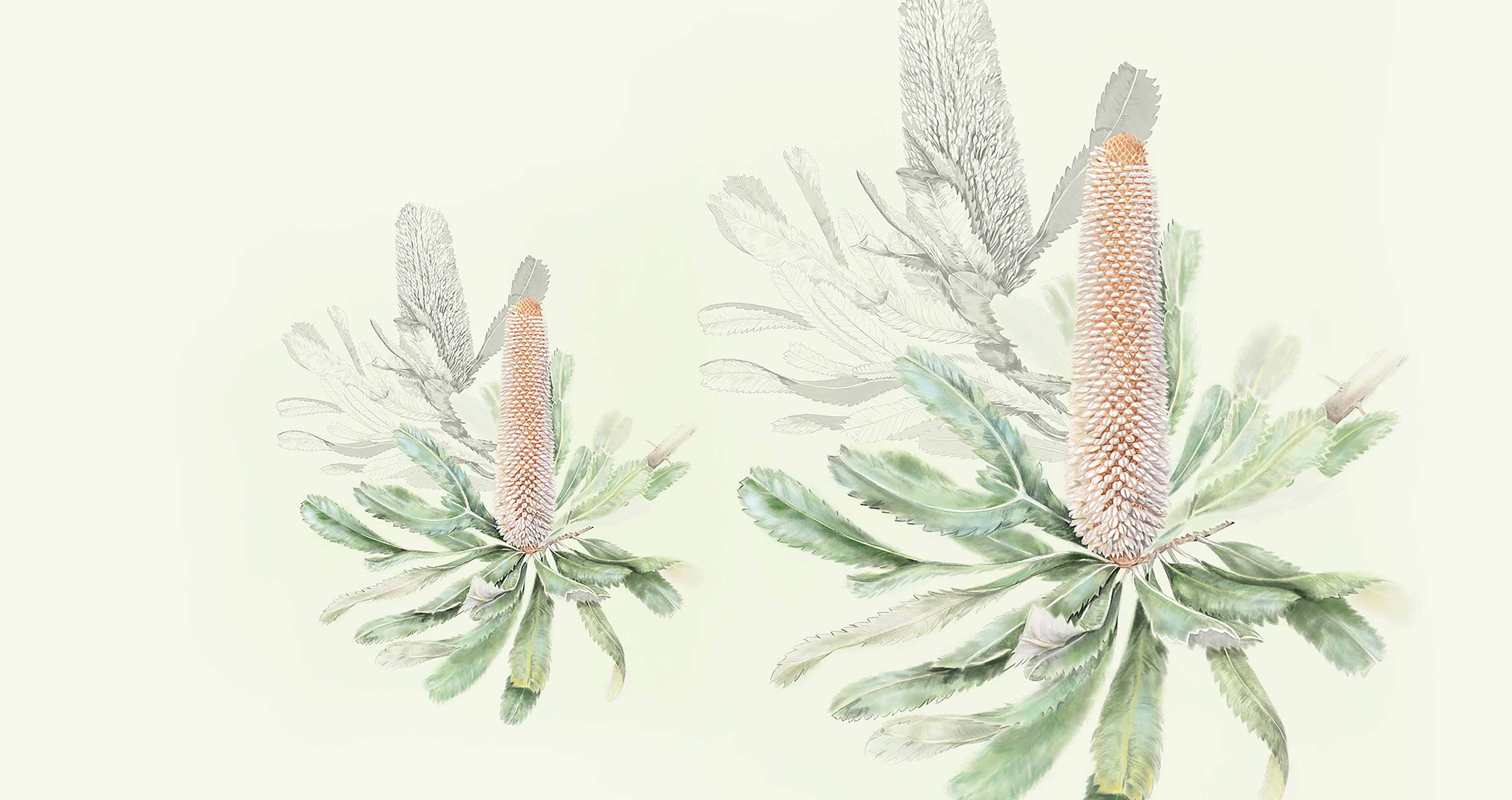
Above: Intense coloured detail, such as the banksia above, may not be appropriate for every context. Commissioning an illustration similar to this takes time to produce and will most likely sit within the $960 – $1,200 price range.

Above: This design was created for charity and not commissioned.
It is a good example of how illustration is integrated into design. The cost for a work like this would sit at the low end of this design and illustration range $1,200 – $5,500.
Receive a tailored quote here
By providing answers to the questions below, I can estimate an approximate quote and timeframe.
I am always here to help.
Feel free to contact me at any time with questions.
Questions related to working together.
These FAQs relate to information pertinent to working together.
Much of this information will be discussed in the first meeting. Reading through these FAQs before the first meeting will assist in understanding the process.
I’m always here to help and will be happy to answer questions regarding any of these topics.
Illustrations can be created for almost any commercial context, either for digital output, print or both simultaneously. Some examples may be a one-off printed work, a website or a scientific paper.
Even in a standalone illustration, design is usually integrated. So please expect graphic design to be brought up early on in conversations about illustration.
For commercial work, I offer digital illustration.
Although my work starts by hand, the final rendering will be completed digitally.
I paint in Adobe Photoshop using a Wacom Intuos Pro Tablet.
Adobe InDesign and/or Adobe Illustrator are used for design output.
I do not use any form of AI in any part of my creative process.
My skill set as a graphic designer means I can integrate illustrations into production for print and digital seamlessly.
When I work traditionally, I like to use graphite, charcoal, and watercolours. To keep costs down, I try to emulate this as accurately as possible in the digital space.
The final file/s can be delivered in almost any desired format (e.g., PNG, JPEG, PDF).
If the illustration is part of a design or publication, the final files will be delivered to the manufacturer.
In Australia, copyright is automatically assigned to an author’s IP (intellectual property) as soon as something is created.
Quoting from IP Australia
Copyright protection is free and automatic. It protects your original expression of an idea as soon as you document it.
This is subject to change if a contract is signed that says anything to the contrary, or by working in a different country under different copyright laws.
Typically, a licence is what is granted to a client when commissioning an illustration. A licence gives clients the right to use illustrated work within agreed-upon parameters. I don’t sell the copyright to my illustrations, but rather license them.
The verbal agreement is the way I specifically state where and when an illustration can be used in plain English.
I want my clients to be able to use the illustrations created as much as they need. Writing this agreement is a two-way discussion to ensure each party is satisfied with the parameters set.
If the need for usage expands beyond the original agreement, this can be organised.
At the time of writing and releasing this (2026), any type of AI-generated visual art or creative writing is not eligible for protection under Australian Copyright Law.
Quoting from the Australian Copyright Council
Artificial Intelligence & Copyright fact sheet (2025): Under Australian copyright law, a literary, dramatic, musical or artistic work, that does not have a human author is not protected by copyright.
Please be aware that I ask for half the full cost of the project upfront and the second half when the job is complete.
For larger amounts, staggering payments over three or four instalments can be discussed.
Please contact me if there are further questions.
Any major alterations due to a change of mind made after each working stage is agreed upon will result in an extra fee.
Correcting spelling and grammatical mistakes are not considered changes.
Rewriting whole paragraphs or deleting a paragraph are changes.
Adding an extra leaf to a tree is not considered a change.
Changing the tree species is a change.
Changes that must occur due to an unforeseen circumstance are taken into consideration and not treated the same way as a change of mind.
The hours I charge for are less than the time allocated for the project.
The hours involved in a project may be 48, yet the timeframe allocated to the project is two weeks.
This time difference is due to a few factors, mainly the waiting time that occurs when working on creative projects.
For clients, this may be the first time they have had to make these kinds of decisions about their work. Although I do set timeframes for receiving feedback, I try not to rush this process as much as possible.
I account for this time within the project scope but do not charge for it.
Who am I interested in working with?
Those who have generated ideas through research, work, thought and study rather than relying on ideas and output generated by AI (artificial intelligence).
This isn't to say that AI tools haven't assisted the creator in some way throughout this process, for example, in data collection, spelling corrections, etc. I am aware it may soon become impossible to separate modern work output from AI completely.
Please read my stance on AI usage here.
If you have any questions, please don’t hesitate to reach out.

Follow this Instagram account for more illustration.