ISBNs and Barcodes

September 2026

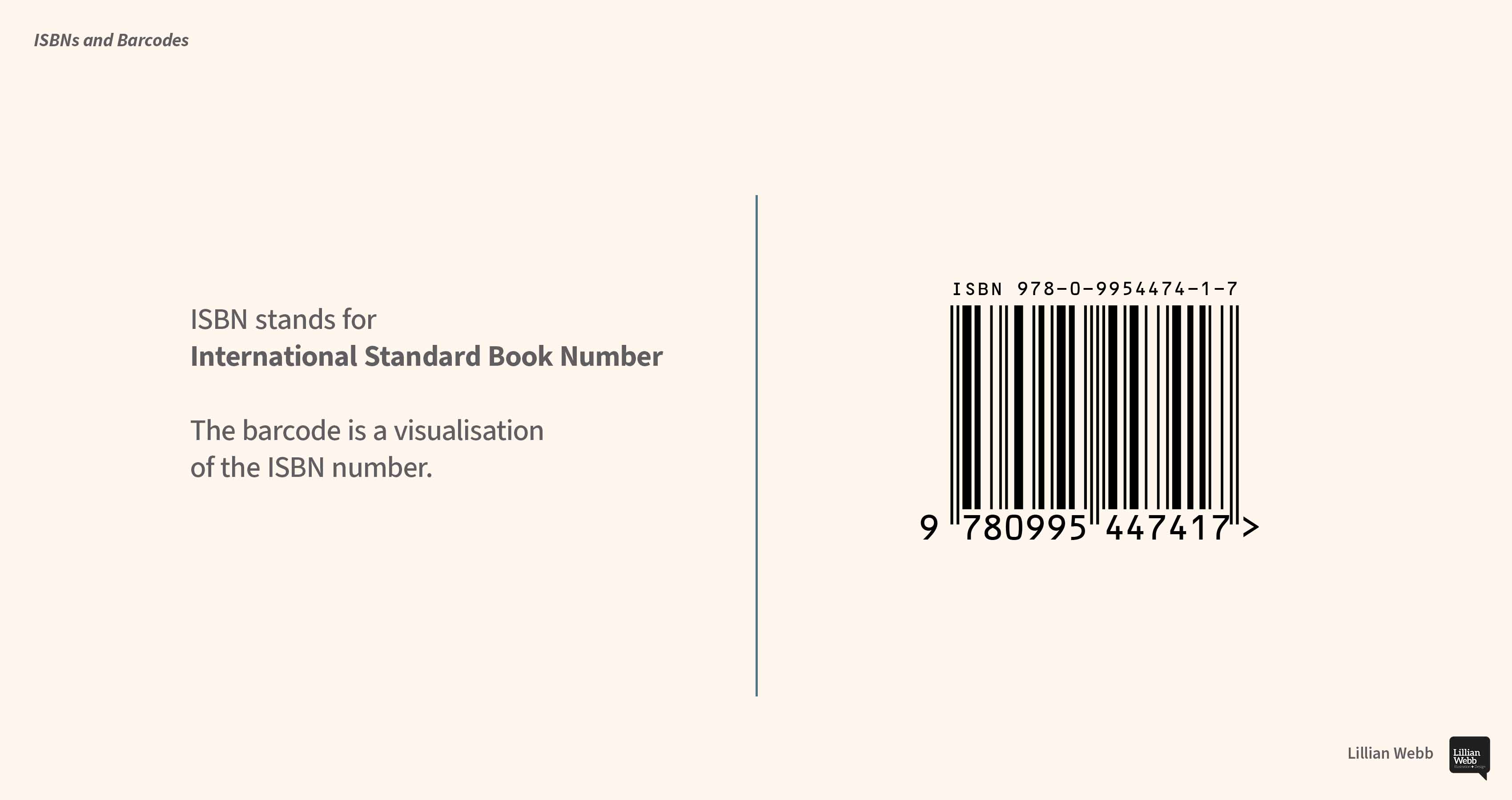
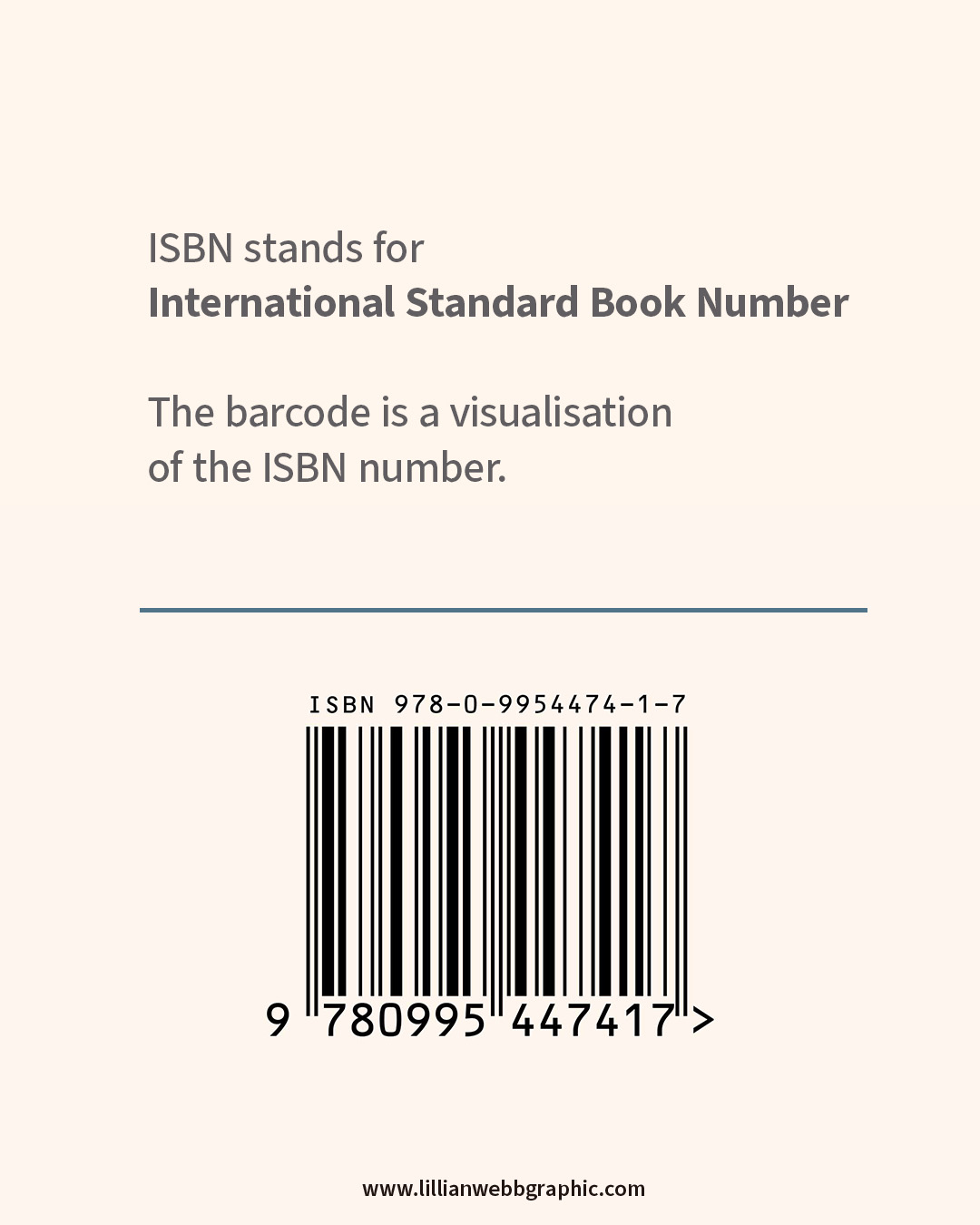
ISBN stands for International Standard Book Number.

The barcode is a visualisation of the ISBN.


Does a book need an ISBN and barcode?

If the book is being distributed for sale in any way, it must have an ISBN and barcode featured on the book.

If the book is only being given away, it does not require an ISBN or barcode.


Every new book needs its own unique ISBN.

This includes revisions of an already published and then re-released book or a paperback version of a hardcover book.


The ISBN must first be purchased, then the barcode visualisation of it can be bought.


An e-book does not need a barcode but still should have an ISBN assigned to it for identification purposes.


When an ISBN is purchased and assigned to a book title, it is connected to an international database.

The title, copyright and prices for a publication can be accessed and managed from anywhere in the world.

Most bookstores, including online stores, require a unique ISBN in order to sell a book.

If a bookstore’s barcode scanner stops working, they can always enter the ISBN of a book manually and find it on a database.


What is an ISSN?

An ISSN is a small barcode that may be seen next to the main ISBN.

It is usually included in serial publications such as magazines or journals under a single title.
No items found.

Where to buy an ISBN?

My recommendation is to purchase all ISBNs and barcodes from Thorpe-Bowker.

Thorpe-Bowker is the official ISBN/barcode distributor for Australia.


Some initial costs are involved in registering as a self-publisher.

For new publishers, the total fee will be around $200 (at the time of writing this, 2026).

Get started here.

No items found.

Should the free ISBN offered by Amazon, IngramSpark or other POD companies be used?

In general, I don’t recommend using free ISBNs from Amazon or IngramSpark.  

Free ISBNs restrict publishers to only distributing through the Amazon or IngramSpark system (depending on who they operate with). If an independent ISBN is purchased, then it can be used freely across platforms.

There are some situations where free ISBNs and barcodes could be used. If, for example, someone is selling note pads on Amazon with no original content in them, then there may not be a need for an author's ISBN and barcode. The product will still need a barcode to be sold, but there may not be a need for the author's name to be connected to any original intellectual property (IP).


The individual doesn't technically hold the right to their imprint with a free ISBN. 

The imprint is the name of the self-publisher, whether they operate under their own name or a publishing name.

When an author gives up rights to their unique imprint, this is giving away the unique link to IP and, by extension, the copyright over their work.

The work is no longer uniquely the author's IP, it’s just another product on a system.


Here is a statement from IngramSpark on this topic: 

What many self-publishers don’t realize is that if you do not purchase the ISBN yourself, your publisher imprint will not be associated with your book. If you use a free ISBN through a service, it will hold the service’s imprint, not your own.


If an ISBN is purchased through Thorpe-Bowker, the information is legally connected to that book and can’t be changed, no matter who prints/publishes it.


Thank you for reading!

I hope this article has helped clarify a few questions around ISBNs and barcodes. An ISBN connects the IP to the person. It’s important to know who is the original author of written information. My article about copyright is all about an author’s rights in Australia.

Credits

Written by Lillian Webb

Edited by Gina Cranson

Proofreading by Elizabeth Bird