Distribution options
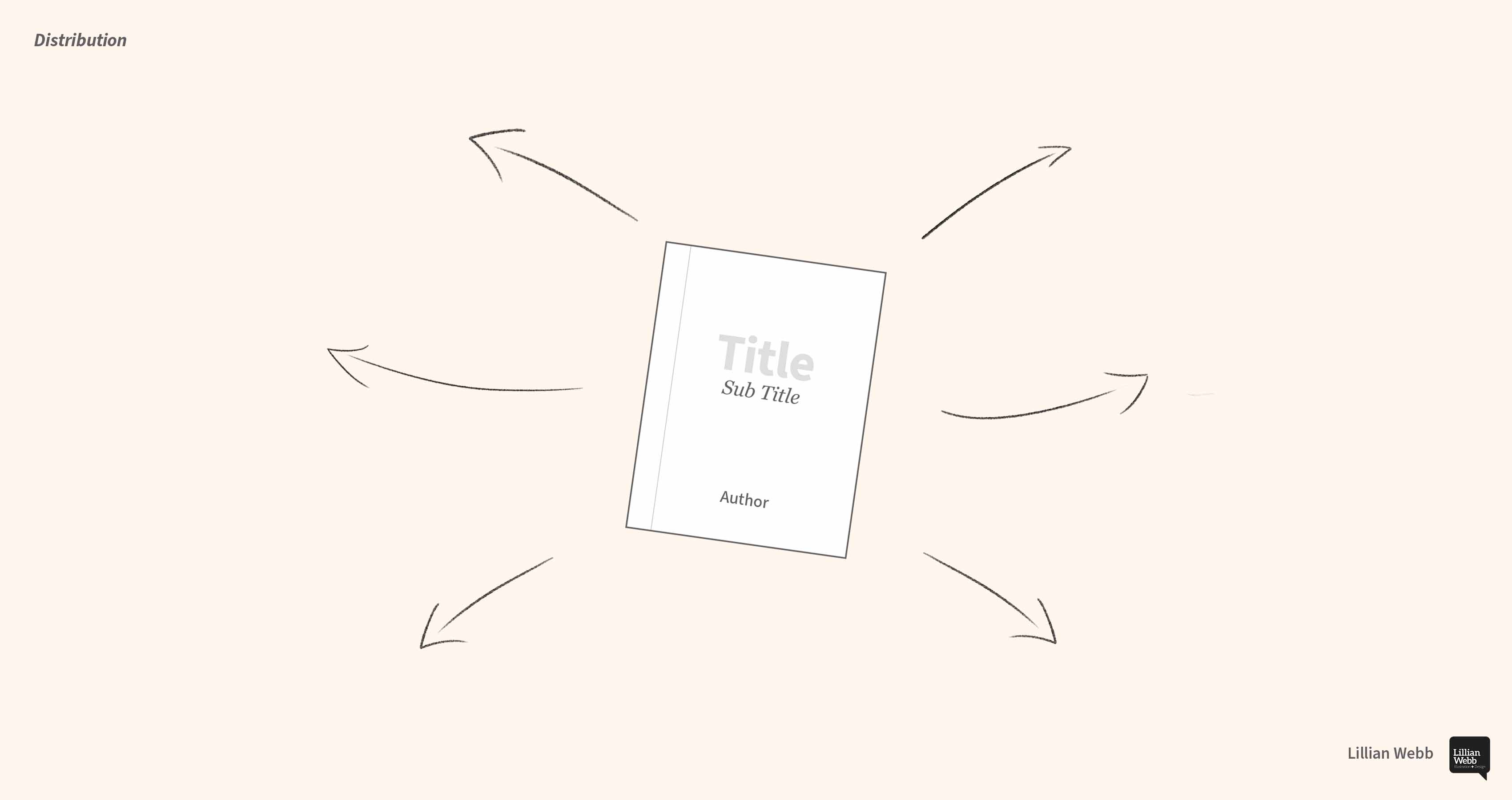
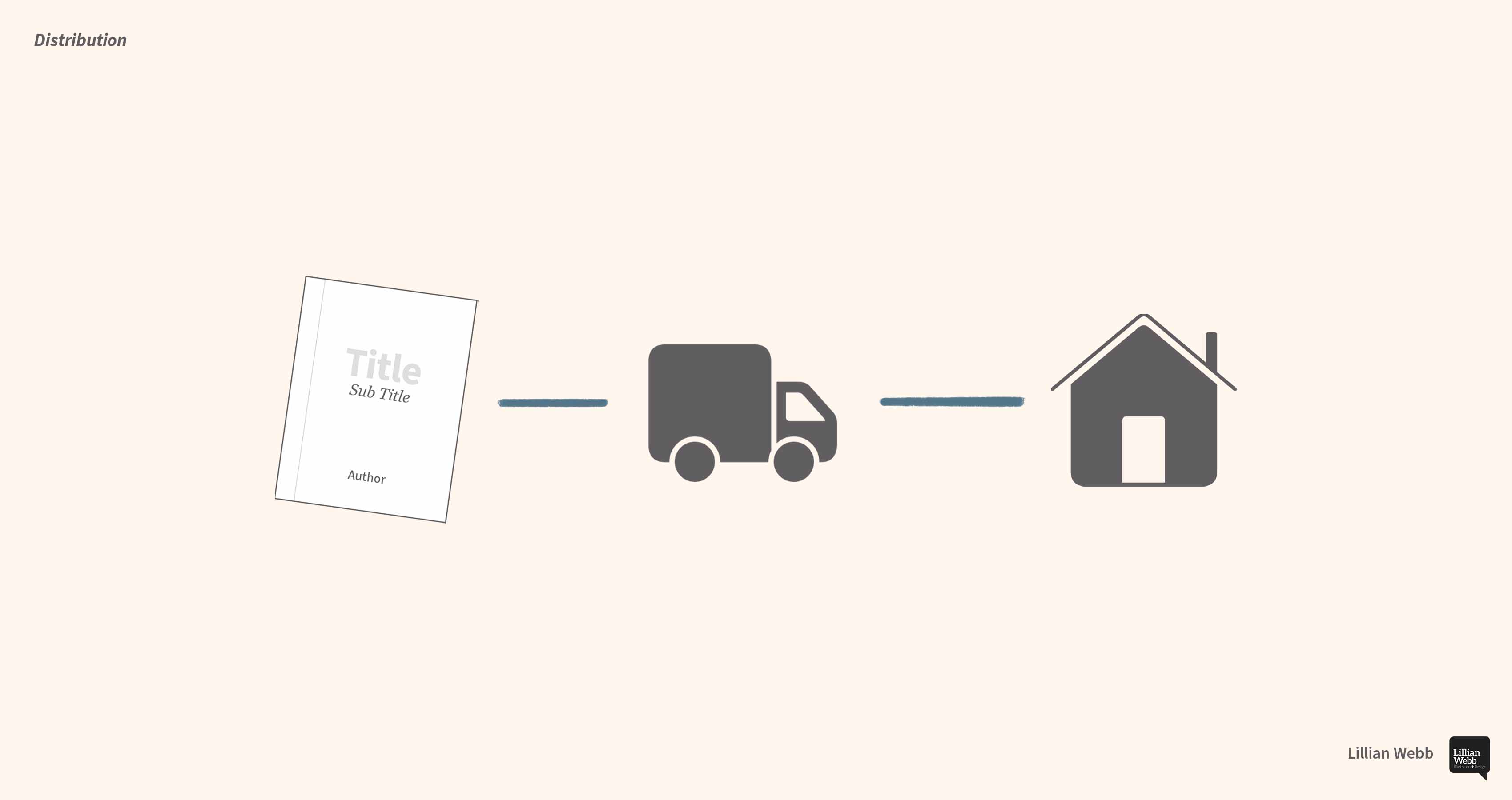
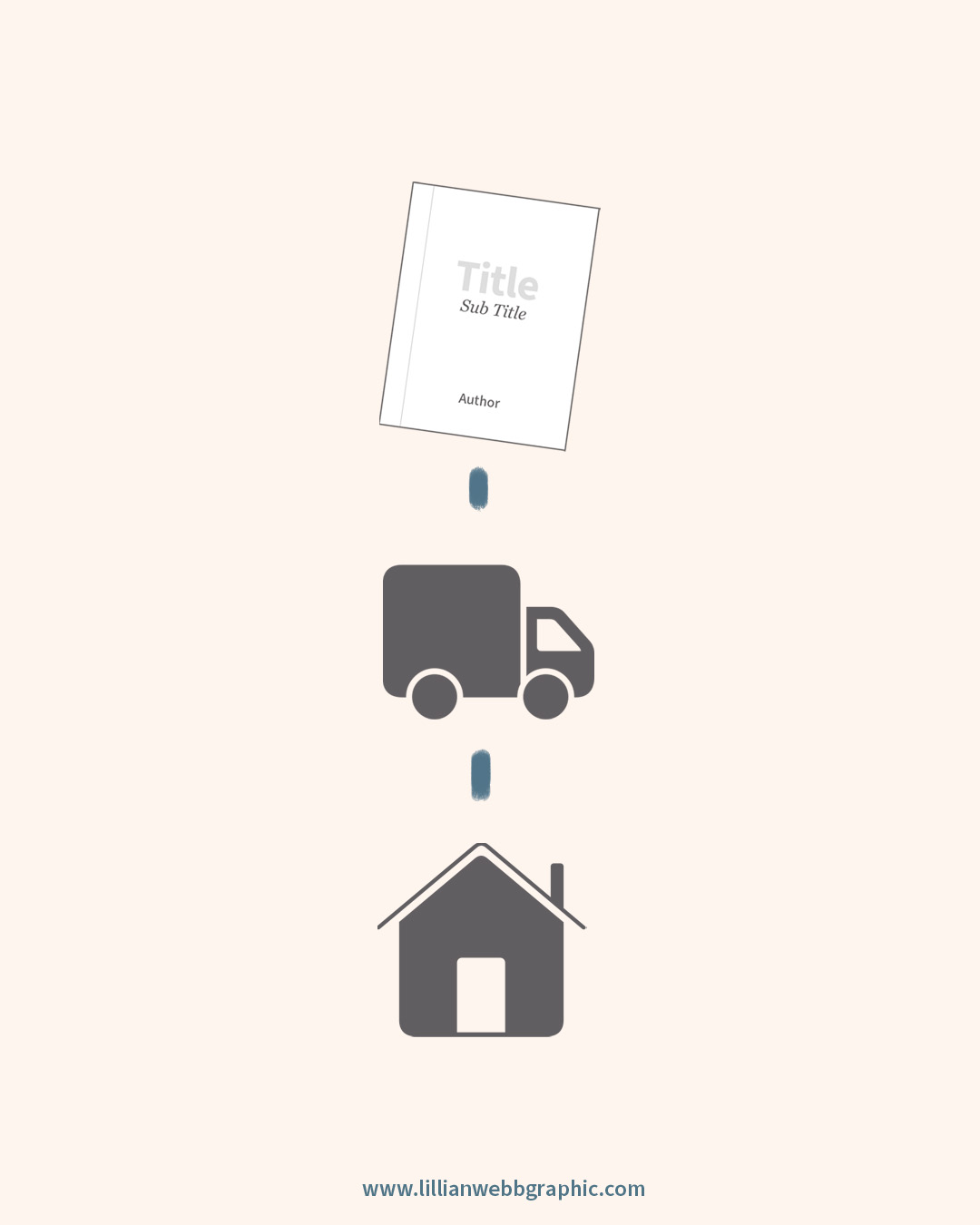
Although more nuanced in practice, below is an overview of the options available for book distribution.
- Traditional publishing
If published with a major publishing house, the publishing house will organise the distribution of the book.
These distribution services are industry-internal and are typically not open to a self-published author.
- Amazon POD
Self-publishing with Amazon uses their worldwide distribution and their website becomes the author’s online storefront.
Amazon's distribution services have benefits for international orders and speed of delivery. Authors often keep Amazon as part of the distribution chain for these reasons.
Bookstores, schools, universities and libraries don’t typically order from Amazon as they cannot make a profit or lose money from doing so.
- IngramSpark POD
Similar to Amazon, self-publishing with IngramSpark gives access to worldwide distribution.
Once listed with IngramSpark, a book will become available to thousands of online retailers in Australia (and the world), including Amazon, Booktopia, and The Nile, to name a few.
IngramSpark also allows a book to be ordered by brick-and-mortar stores, libraries, schools and universities at a trade discount price that the author can set.
Here is where IngramSpark becomes complex
Although IngramSpark facilitates sales of a book through the avenues mentioned above and pays the author for these sales, they don’t deal directly with individual customers.
They also don’t provide a public-facing IngramSpark storefront in the same way that Amazon KDP does.
Amazon allows the self-publisher to use its website as an online storefront and allows individual customers to order directly from this site.
IngramSpark won't allow an individual customer to order directly from them; they enable third parties to do this. Amazon is one of these third parties.
When using IngramSpark, setting up an independent e-commerce website can act as a storefront for the book. This usually also means that the self-published author must order and ship the title themselves to individual customers.
Some self-publishing authors bulk order copies from IngramSpark and then sell them through their own e-commerce store. They pack and ship the orders themselves.
Setting up an e-commerce website is part of the greater initial start-up cost that comes with IngramSpark.
There are more nuanced ways to use the IngramSpark system, such as the two examples below.
Example One
The self-published author, through the IngramSpark dashboard, can manually order books for an individual customer and have them sent directly to their address.
E-commerce systems would still have to be put in place for ordering, receiving payments, and collecting private data but the physical handling of the product is eliminated.
If an international order comes through, the author can order a copy to be printed in the customer's country of origin.
This can drastically reduce the shipping cost for international orders.
Example Two
An author self-publishing with IngramSpark could do away with manual ordering altogether and just allow orders to be run through IngramSpark's third-party affiliates, such as Amazon.
None of the above guarantees sales of a book. They are just examples of how the system can be used in a variety of ways.
Where are the advantages?
IngramSpark is a flexible system. Not being locked into one way of doing things has its advantages. With this variety of choice also comes complexity.
Possible advantages of IngramSpark:
- Higher print quality (for a POD product)
- Greater distribution range
- Allows books to be ordered by brick-and-mortar stores, libraries, schools and universities
- Gives the author more control over setting a trade price and a single sale price
- Flexible international orders
- Significantly cheaper than a traditional print run
- Less waste if the product doesn’t sell
- Fewer physical storage issues
- More financial control than Amazon
Possible disadvantages of IngramSpark:
- In-depth set-up
- Need for an e-commerce store to get the most out of the process
- More personal responsibility for order fulfilment
- Possible manual handling
IngramSpark is a rapidly changing company. In the US and UK, they are now implementing ways in which individual ordering and distribution are fully integrated into personal e-commerce websites.
Options for self-published authors will expand if this is fully implemented.
- Amazon and independent printing
Amazon offers fulfilment services (Fulfilment by Amazon) in Australia, separate from its printing services. This means that a book could be printed independently of the Amazon system but shipped and stocked by Amazon.
This can sometimes be a way to avoid the low print quality of Amazon's POD product while utilising their warehousing and fulfilment services.
This set-up requires a business plan with Amazon and usually requires high sales turnover to make it profitable.
- Doing it all yourself
Printing a book independently, setting up a personal website with e-commerce capabilities, and organising the shipping, stocking and posting of a book as an individual: This last method is a lot of work, but it can be a good option for those who already have an online presence and store.
There are hybrid solutions that use a mixture of the options listed above.
An author may create an offset-print run of 500 hardcover copies and sell these independently while listing a softcover version of the same book on IngramSpark for POD sales.
I have worked with authors from all of these distribution options. Each has pros and cons, but all forms have worked for one person or another in a different way.

%201.jpg)

%20and%20Amazon%201.jpg)